Lessons from my First Year of University Teaching

Last term I taught the 3rd year data analysis course for nursing students at Western.  Boy, was it a ton of work!  Overall, I really enjoyed the experience and learned a lot about how teaching and learning has changed since I first began university back in 2001.  Currently I am teaching a graduate-level course in post-positivist (quantitative) research methodology and that is a super fun!  I really enjoy in-depth intellectual discussions about research with a small group (18 students) rather than talking at 120 undergrads who don’t care about statistics at all and want the “right answer” (which isn’t always possible).

Here are the top lessons I learned about teaching so far (I am sure there are many more to come!)

1. I am a dinosaur.  I grew up going to the library, reading hard copy books, writing out essays on paper with a pencil, etc. Students these days have always had the internet at their fingertips and they will sit there and Google everything that you say like fact-checkers at a political debate. Take home message: I need to learn how to use technology to my advantage and not waste valuable time in class lecturing off of PowerPoint slides when I could be using more engaging activities during face-to-face time.

2. Students need structure more than I realized.  One of the assignments last term was to do a content analysis of transcripts from interviews or online forum discussions by patients with different conditions.  Rather than embrace the freedom of interpreting the data for themselves, many students were frustrated because there was no certain correct answer (like so many things in real life).  We gave them a reference for an article that told them step-by-step how to conduct a content analysis and about 1/3 of the class did not read it, resulting in them doing the assignment in a way that did not make sense. Somehow the fact that they did not read the article that they were explicitly told to read was my fault. Interesting.  Take home message: Repeat key instructions in class, post them on slides, etc. Give them explicit instructions.

3. TAs are like a box of chocolates. Seriously though, you never know what your TA will be like and they may not know the course material or mark assignments the way that you would like them to be marked.  They are also graduate students with their own coursework, lives, etc. so be realistic about expectations. Despite having good rubrics, the assignments that we had in the course were lengthy and complex which also made it challenging for the TAs. Also, students will blame you for delays in marking and mistakes on their rubrics, even if you make sure they know their TA does the marking.  Take home message: Design assignments that are staged so that they are easier to evaluate by someone with little content knowledge of your course.

4. PhDs do not prepare people to be awesome teachers.  I really thought that my experience teaching lifeguarding and first aid, personal training, and coaching basketball would make teaching easier but university teaching is very different.  It is kind of sad that students pay so much money for school and the quality of teaching is so varied.  I really like that tenure-track teaching positions are becoming more prevalent and that most schools are providing support for teaching.  I feel lucky to be able to gain some teaching experience and attend workshops and courses at Western’s Teaching Support Centre during my doctoral program. I cannot imagine how difficult it must be to pop into a tenure-track job and try teaching for the first time while trying to apply for grants, publish articles, and commit to service.  This job is crazy.  Don’t get me wrong, it is what I want to do (and as an RN I know that I have lots of other options), but I am also not naive to the demands of the career path I am pursuing. Take home message: I need to devote more time to learning to be an effective teacher so I can have a successful transition into a tenure-track position.

Now to get back to working on that dissertation proposal!  (It is almost done and I am planning to defend in the Spring so that I can get started on data collection!).
Thoughts about Nurses and Strength Training

Nurses are a valuable part of our health care system and we work very hard to deliver good patient care.  As a profession we sometimes get a bad rap for not being exemplars of health because some nurses are overweight.  I would like to change the channel on this discussion and approach this issue from a different perspective.  Health is more than just looking good and being fit has important implications for the nursing workforce and healthcare generally.

First of all, body composition is only one component of being healthy.  Hopefully by now you know about the “skinny fat” phenomenon and why being thin doesn’t necessarily mean you are healthy.  On the flip side, I don’t think that people should use this an excuse to overeat.  I encourage us to embrace a more holistic view of health and well-being rather than simply judging nurses’ health based on their appearance.

Secondly, the nursing profession is predominantly made up of women (many of whom are aging) which is important for a few reasons. 

1. The Western cultural ideal of what women should look like influences the standard against which women are measured.  Most nurses are women so therefore some people judge nurses’ “health” based on how well they meet this ideal.  Again, you cannot tell solely by appearances how healthy someone is. 

2. Women and men have different hormones which, like it or not, influences our body fat levels.  Women are supposed to have more fat than men and as we get older (which many nurses are), we tend to put on weight because of changes in our hormones.  

3. Women have been fed a lot of BS about fitness and nutrition.  This ties into my point about the Western beauty ideal.  I find it shocking that I still meet so many women who are afraid of lifting weights because they think it will make them “look like a man” or who spend hours doing cardio and counting calories in their fat free asparatame-filled cancer-causing diet “foods” that have pretty much no nutritional value.  While this may come across as being a little harsh, I want to make it clear that I don’t blame women entirely for buying into the propaganda that has been fed to them for years.  There are tremendous rewards for those who live up to conventional beauty standards so how do you blame people for wanting to be successful, even if many of us don’t agree with the definition of “success” that has been handed to us?

At any rate, I think we do a very good job as women of being mean to each other and I think that needs to stop.  Be a beauty – there is nothing wrong with that if that is what you want.  However, you are more than just a beautiful object to look at!  You can be beautiful and strong and smart and whatever you want.  Sometimes it seems like there is this idea that you can only be one or the other – that beautiful women are stupid or that intelligent women don’t care about their physical appearance.  I don’t think I need to point out how naïve and simplistic these assumptions are.

So why am I talking about beauty in a post about fitness anyway?  Well I believe that many women steer clear of strength training because they think it will sacrifice their beauty.  In other words, if a woman thinks that lifting weights will make her look masculine, she will avoid doing it. 

So what? 

Well, as I mentioned, most nurses are women so this has some implications for our profession.  Nursing work can be very physical at times and requires a high capacity to do work.  Many of us work busy 12 hour shifts and help turn, stand, transfer, and walk patients throughout the day.   Back and shoulder injuries are common among nurses in addition to high levels of stress and burnout.  Being fit and strong can help increase our work capacity, prevent injuries, and improve work recovery.  Increasing our physical strength and endurance can help make our jobs (and lives) easier to handle, provide us with more energy, improve our personal health, help us manage stress, and improve our physical appearance.   With so much to gain, what are we waiting for?

Do Impact Factors Matter in Nursing?

I just got back from my first Academy of Management Conference and I was astonished by the emphasis on the importance and status of publishing in “A-level” management and business journals.  In nursing there is not a whole lot of emphasis on this and I started to wonder why not?   Is it because I’m studying in Canada?  Are we less knowledgeable about impact factors in Nursing?  Am I naive about the effect journal choice can have on my academic career?   Are there A-level journals that I don’t know about?   The purpose of this post is to give a brief overview of what impact factors mean in nursing and find out if there are “A-level” journals that I should know about.

What is an impact factor?

Impact factors are a measure of how often articles from a particular journal have been referenced by other articles.   The idea is that the best articles will be used by other researchers in the future, thus spreading good ideas and having an “impact” on the field.  Apparently in business and management departments at colleges and universities they often have formalized lists of “A-level” (best), “B-level” (better), and “C-level” (good) journals and professors’ careers are largely influenced by their ability to get articles published in the best journals.   I have been fortunate to work with very productive and supportive research teams and supervisors in kinesiology, medicine, and nursing where all article publications are celebrated equally.  Granted, if you get an article published in Nature or The Lancet that is a really big deal for anybody.

How do you interpret impact factors?

Impact factors were created to measure article and journal quality so the best journal should be listed first, followed by the second-best, etc.  However that is not true for nursing journals.  For example, right now the journal with the highest impact factor in nursing is Birth: Issues in Perinatal Care (impact factor = 2.84 [Science Watch, 2013]).   Does this mean that this is the “best” journal in nursing?   If you are studying issues related to childbirth and nursing, then absolutely!  Otherwise, probably not.  The journal’s high impact factor probably reflects the fact that a lot of nursing scholars are doing work in this area and that it is a popular resource for those scholars.  While I am sure that there is interesting and valuable work in there, I am doubtful that I will ever read, cite, or publish an article from this journal because it is unrelated to my research interests.   This raises the question of how useful it is to compare nursing journals that have different aims and audiences.  I think ranking is helpful but sub-categories and/or discretion are also required.

Impact on Research, Practice, or Both?

Another thing to consider is that an article could have a powerful impact on nursing practice despite not being cited by other researchers.  Many nurses taking DNP, NP, master’s, and bachelor-level degrees are not necessarily going to be conducting research but they are likely to be knowledge consumers that apply the findings of nursing research to their professional practice.  On the other hand, just because an article is well-known and often cited by other academics doesn’t necessarily mean that the article had an impact on practice (i.e. real life).  In fact, it is possible that an article could be cited a lot because people disagree with it or because it reflects an old way of thinking about something that is no longer relevant but helps the reader position new work.  Therefore, I believe that impact factors are an incomplete measure of actual impact.

Are there A-level Journals in Nursing?

Out of curiosity I looked up the promotion and tenure criteria for several prominent nursing schools in Canada and the U.S. and couldn’t find any evidence of a formal “good, better, best” categories of nursing journals, though all considered article quality and quantity as one indicator of productivity.   This leads me to believe that publishing in higher ranking nursing journals is still better but that there is room for discretion based on the topic or focus area of the work (e.g. maybe the #1 journal in mental health nursing is ranked 20th overall but still deserves credit for being the best in the specialty area).

What is the value of impact factors in nursing?

Impact factors can give us an idea of what areas of nursing research are most popular and receive the most attention by other scholars.  The relatively low impact factors in nursing compared to some prolific medical journals may also indicate that nurses are more likely to cite sources outside of nursing whereas other disciplines are unlikely to cite nursing scholarship (Polit & Northam, 2011).   As a developing scholar I certainly want my work to be taken up by others and make a difference, both in research and in practice.

Comparing impact factors of journals that are in the same specialty or research area makes sense and can help distinguish between different levels of scholarship quality, however we can’t just use the list as is to rank all of the journals in nursing without considering their specific focus.  In addition, it is important to create ways to assess and evaluate the impact that nursing research and scholarship has on nursing practice and, in particular, patient care and health outcomes.  Impact factors are important indicators of scholarship quality and academic success and productivity but they don’t paint the whole picture!


References:

Polit, D. F., & Northam, S. (2011). Impact factors in nursing journals. Nursing outlook59(1), 18-28. Retrieved from http://journals.lww.com/jcnjournal/Documents/ImactFactors_NursingOutlook_2011.pdf

Science Watch.  (2013).  Journals ranked by impact: Nursing.  Retrieved from http://archive.sciencewatch.com/dr/sci/10/mar28-10_1/

Why I Love Working with Older Adults

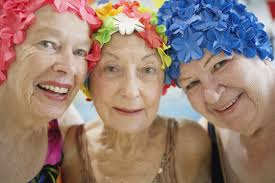
older ladies

During my undergraduate nursing degree, many of my colleagues were passionate about working with children or pursuing the excitement of the emergency department.  To be honest, I wasn’t really sure where I saw myself working when I graduated but luckily, I found the perfect spot.  I work in Specialized Geriatric Services on a rehabilitation unit. Like all nursing specialties, it can be challenging and hard work at times but it is also extremely rewarding to be part of the healing journey.  Going to work still makes me feel like I won the lottery!  I get to help people who are mostly amazing and I get paid for it?  How lucky can a girl get?

When I think about it now, it seems obvious that I work in geriatrics.  In my past life as a personal trainer I helped run a cardiac rehab program, taught fitness and aquafit classes for seniors, and worked with many older clients.  I grew up in Nova Scotia which is pretty traditional in a lot of ways and I think that has also had a profound influence on me.  I enjoy reading, gardening, and quilting (among other things), and I cringe at the thought of living in a fast-paced city like Toronto or having to drive more than 15 minute to work.

Seniors have perspective, life experience, and many also have wisdom.  Some are full of colourful stories.  Seniors tend to value people and experiences more than material wealth (to be fair, I also have a lot of young friends who share these values).  Many of them appreciate a good conversation or a listening ear;  they live in the real world, not the mind-bubble of their smart-phone.  To be sure, there are grumpy old people and some who are not doing so hot (just like any other age group), but generally I find older adults to be kind, sincere, and appreciative.

I think that all nursing programs should have a core course devoted to seniors.   Not only are they wonderful people to work with but their physiology is different (e.g. responses to medications are different than healthy young adults which drugs are tested on) and they face unique psycho-social challenges that younger people don’t think about like losing your independence and living on a fixed income.   I learned a lot about aging during my kinesiology degree but I am really keen to further my expertise in this area and recruit more nurses to this wonderful area of nursing practice!

Wishing you a Happy Canada Day!

-Emily


Why I am still in school…

For my first post, I thought I would share with you a little bit about what inspired me to pursue a career in nursing and academics.  

My career journey hasn’t exactly been straight forward.  When I was five years old I dreamed of being an author when I grew up.  My friend Meaghan and I would make up stories in little handmade notebooks and her father would type them up on his fancy typewriter, handing us back our “published” stories on crisp white paper.  Then we would make the illustrations by hand and use construction paper to make front and back covers. Oh how I loved making up stories!  

I was by all accounts a very shy, introverted child and spent most of my time reading.  Thankfully this has served me well in graduate school, as I have become quite a fast reader because I’ve done so much of it.  At any rate, I have always enjoyed the world of ideas and learning new things.  I am not the brightest star in the sky by any means, but I do tend to approach life with curiosity and lots of questions.  

As a naive 18-year-old from a small town in Nova Scotia I came to Western to study English literature.  Although I adored studying literature and writing, I wasn’t confident that I would be able to make it as a writer so I took a year off mid-way through and ended up at Acadia University where I completed a kinesiology degree.  It was here that one of my professors approached me to do an honours thesis project with him in exercise physiology.  I jumped at the chance and ended up creating a field test for athletes to assess fatigue and overtraining.  Through this experience I learned how to conduct research from start to finish and had so much fun doing it that I applied to do a master’s degree at Western, in hopes of doing my PhD.  

It is also worth mentioning that I had also applied to the University of Calgary’s accelerated nursing program and was accepted.  I remember telling my mom that I was thinking about becoming a nurse and then pursing a career in nursing research.  As it turns out I ended up doing this anyway but with an MSc in kinesiology and then a degree in nursing.  In the long run, I think this has served me well because I have such a rich background in health sciences to bring to bear on my work.  I have worked as a personal trainer and now work as a nurse on a geriatric rehabilitation unit which is the cat’s meow as far as I’m concerned!  I love working with older adults and the staff on my unit are so knowledgeable and supportive.   Some days I can’t believe that I get paid to do a job that I love so much.

I realize this is becoming a really long post, but I think it helps to get a bit of background on who I am and what inspires me to do the work that I am pursing.

My main motivation is that I care about about people and envision a society where people have the means to be healthy and happy, to experience friendship and community, and live good lives.  It saddens me that there is so much suffering, poverty, and disease in our own backyards and that people face so many barriers to being healthy and happy.  In particular, it doesn’t make sense to me that many of our health care providers are stressed out, unhealthy, and unhappy in their jobs.  We spend a tremendous amount of our life energy at work and it can have a huge impact on our mental and physical health.  How can we expect patients to be taken care of if we aren’t taking care of ourselves?  Thus, my research area of interest is examining how we can create healthy work environments that contribute to nurses’ health and wellbeing, as well as trying to understand how that affect outcomes for patients, health care organizations, and the health care system as a whole.

While I love my job as a nurse, I find research exciting and see the potential it has for creating new evidence to inform best practices and make our health care system better.  I hope that one day I can look back on my career and know that I made a valuable contribution with what I had to offer. I genuinely want to leave the world a better place for having had me in it. And that is why I have just completed my 12th year of university.