The Defense

On Monday morning I had my PhD Defense and it was completely wonderful!

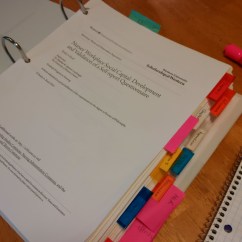
For weeks beforehand I prepared diligently, trying to anticipate difficult questions my examiners might ask. I made an exam binder with my whole dissertation in it, Mplus output, copies of my survey booklet, key references, detailed notes that I made as I re-read my work, etc. What can I say, I like to be prepared.
IMG_20160521_085203 (1)
My super organized exam binder 🙂 

I finally chopped my presentation down to 30 minutes on Friday. I rehearsed it twice on Saturday, one last time on Sunday night (after an epic game of water gun capture the flag with my son). I went to bed on time and slept like a rock.

On Monday morning I was just the right amount of nervous and excited. My game plan was to enjoy the day; the day of my once-in-a-lifetime PhD defense. The hard work had already been done – the hours of endless reading and thinking, writing and rewriting…rewriting again…the data collection and many hours of data analysis….it was all done!  I was as ready as I could be.

The public presentation went well. I felt comfortable and confident and enjoyed sharing my work with everyone who came. About five minutes in, the computer shut down for updates but it broke the ice a bit and helped me relax. It also helped that the audience was full of friendly faces 🙂  After the presentation was over there were a few questions and some discussion.

Then I went to the exam room with the examiners for the “grilling session”. Needless to say, I was pleasantly surprised when the first examiner opened with praise and compliments about my study, writing, and attention to conceptualizing social capital at different levels of analysis, etc. The whole exam is rather a blur but at that point, I knew I was going to be fine. Of course they asked me some challenging questions but overall it was an enjoyable discussion. I am also very hard on myself so it was really nice to hear such positive feedback about my work.

The defense made me realize that everything my committee had done to guide me and challenge me over the past few years had resulted in a solid dissertation study. More importantly, I have developed the knowledge and skills required to be an independent researcher and hold my own as I move on to my new role as an Assistant Professor.

I passed and had minor revisions to complete but the most difficult part was finalizing my acknowledgements section. How do you adequately say thank you to every single amazing person who’s been part of your journey?  The whole reason I became interested in workplace social capital (the topic of my dissertation) in the first place was because I found myself surrounded by caring, supportive colleagues, friends, and family as a single parent working on my PhD. Initially I wanted to look at something completely different – the link between leadership and the work environment and nurses’ physiological health outcomes (something I may do in the future).

My biggest lesson over the last few years, both first-hand, and through my research, is that social capital is tremendously valuable.  Not confined to the workplace, I know I could not have accomplished all that I have without the awesome people in my life. More importantly, social relationships make life meaningful and way more fun!  I am ever thankful for the special people who have been part of my life adventure thus far. Now that my PhD is complete, it feels like 10 million billion elephants are off my back and I am super excited for the new adventures ahead!


Cooking Once a Month is awesome

Some of advice I ever got about Grad School was from a former professor who told me how batch-cooking and freezing meals helped her complete her dissertation. This simple strategy makes a huge difference in terms of productivity and eating healthy (if you choose recipes carefully).  For most of us our leisure time is limited (and sacred), especially if you are balancing family life and a demanding career. Who doesn’t want to spend less time in the kitchen and more time playing, connecting with others, being active, and having a life!

Batch cooking may just be your ticket!  The basic idea is that you cook multiple meals on one day and freeze most of them so that you have less prep down the road.  I’ve been doing this on a weekly basis for a while now but recently I felt like I was in the kitchen all the time so I started looking for new ways to do this.

After scouring the web I found several menu subscription services but nothing that offered many choices – most had 1 menu a month, take it or leave it. So of course I decided to do it on my own but I got quickly frustrated because there are too many recipes to choose from on the internet and I couldn’t decide which ones I wanted to make. It was taking up a lot of my time and the whole point was to save time and make life easier – not spend hours trying to decide what I wanted to have for dinner!

Finally, I found Once a Month Meals – a group of moms who offer several types of menus (e.g. traditional, vegetarian, paleo, etc.) to choose from and make it easy for you to cook meals for an entire month.  For each menu you get the recipes, an organized shopping list, prep day instructions (chopping, etc.), cooking day instructions, thaw list (to help you plan when to take things out of the freezer so you can eat them), serving day instructions (some recipes have add-ons or need cooking), and labels. Obviously it would take a few hours to do all this on your own!

You can also swap meals to make your own custom menu if there is something that you don’t like.  Just enough choice to be flexible without being overwhelming. The other great thing about Once a Month Meals is that they provide very helpful tips and resources to help you every step of the way and save you a lot of headaches.  For example, starting with a mini menu rather than a full menu was a really good idea.

I signed up immediately and yesterday I did my first mini menu.  It was a huge success!  Take a look at how my day went:

Before the big day:

  1. Pick your menu. I chose to do a mini-menu because I only had 1 day free to do everything (shop, prep, and cook).
  2. Decide how many people you are cooking for.  Even though there’s just me and my son I chose to cook for 4 people so that I would get more meals for basically the same amount of work. (Tricky, I know lol) The recipes and shopping list automatically update to correspond to the number of meals you select. Thank you Once a Month Meals!  This is super helpful.
  3. Check supplies and ingredients in your kitchen.  Do you really have 4 apples in the fridge for that recipe? Do you have a slow-cooker if you need one?  Cross-check the shopping list with your inventory and makes notes so you won’t forget.
  4. Add other things you want to buy for the week to your list. The menus don’t cover all of your meals and snacks so add in whatever else you need for the week. For us that’s stuff like milk, yogurt, salad greens for lunches, coffee, etc.

Shopping tips:

  1. Bring a pen so you can check off everything as you put it in your cart.
  2. Be prepared to spend more than your typical shopping trip. You are cooking more than you usually would so obviously it will cost more money. However, it also will save money because you will waste less food and make fewer last-minute trips to the grocery store or fast food joints.  (If you have time and energy for price-matching and/or coupon clipping this can help you save money too).
  3. Don’t go shopping when it is busy. Not something that I enjoy anyway but if you are trying to buy a lot of food it can be overwhelming to deal with a ton of people at the same time.

Prepping and Cooking:

I decided to prep and cook each recipe 1 at a time. The fine folks at Once a Month Meals recommend doing prep the night before your cooking day and I think that would be faster, especially if you are cooking a full menu.  For example, I ended up chopping garlic 3 or 4 separate times for different recipes instead of doing all the garlic at once. Research shows that switching between tasks takes more time than doing one at a time. Another benefit is that you lower the chance of cross-contamination (meats and veggies) and use fewer cutting boards 🙂

Tips:

  1. Clean your kitchen before you start.
  2. Prepare slow-cooker dishes first. Set em’ and forget em’ while you work on other recipes 🙂
  3. Wash dishes as you go. This reduced the number of dishes that I used and the cleanup I had at the end.
20150330_092258
All cleaned up and ready to cook!

What I made:

1. Paleo meatloaf:

20150330_104532

2. Crockpot sweet potato chili

20150330_104545


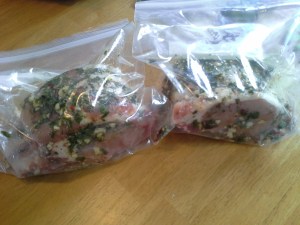
3. Garlic herb Crusted Pork Roast (sub for pork tenderloin)

20150330_111133

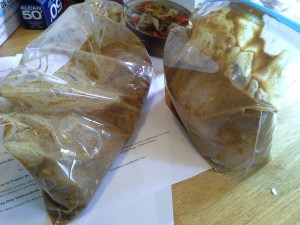
4. Almond butter chicken

20150330_114008

5. Jalapeno Chicken Burgers

20150330_120704

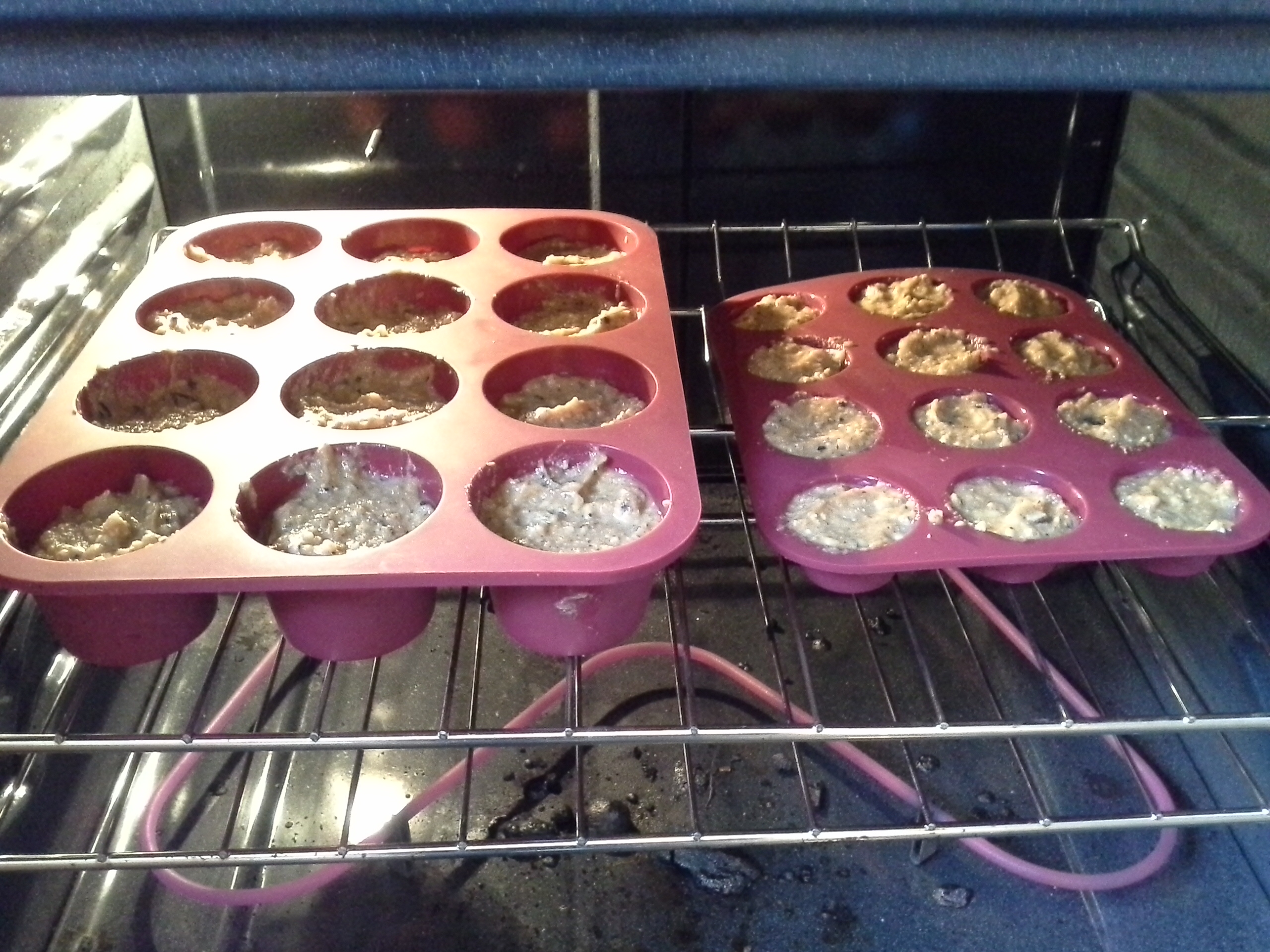
6. Pumpkin walnut protein muffins (my recipe that I added on)

20150330_124132

Grocery shopping took me an hour and a half and cooking took me 4 hours (10am-2pm). We had chili for supper (it was awesome!) and now I have a freezer full of yummy meals to help me through this busy month of marking and writing publications 🙂  You can have better work life balance and Once a Month Meals can help. Check it out!

Lessons from my First Year of University Teaching

Last term I taught the 3rd year data analysis course for nursing students at Western.  Boy, was it a ton of work!  Overall, I really enjoyed the experience and learned a lot about how teaching and learning has changed since I first began university back in 2001.  Currently I am teaching a graduate-level course in post-positivist (quantitative) research methodology and that is a super fun!  I really enjoy in-depth intellectual discussions about research with a small group (18 students) rather than talking at 120 undergrads who don’t care about statistics at all and want the “right answer” (which isn’t always possible).

Here are the top lessons I learned about teaching so far (I am sure there are many more to come!)

1. I am a dinosaur.  I grew up going to the library, reading hard copy books, writing out essays on paper with a pencil, etc. Students these days have always had the internet at their fingertips and they will sit there and Google everything that you say like fact-checkers at a political debate. Take home message: I need to learn how to use technology to my advantage and not waste valuable time in class lecturing off of PowerPoint slides when I could be using more engaging activities during face-to-face time.

2. Students need structure more than I realized.  One of the assignments last term was to do a content analysis of transcripts from interviews or online forum discussions by patients with different conditions.  Rather than embrace the freedom of interpreting the data for themselves, many students were frustrated because there was no certain correct answer (like so many things in real life).  We gave them a reference for an article that told them step-by-step how to conduct a content analysis and about 1/3 of the class did not read it, resulting in them doing the assignment in a way that did not make sense. Somehow the fact that they did not read the article that they were explicitly told to read was my fault. Interesting.  Take home message: Repeat key instructions in class, post them on slides, etc. Give them explicit instructions.

3. TAs are like a box of chocolates. Seriously though, you never know what your TA will be like and they may not know the course material or mark assignments the way that you would like them to be marked.  They are also graduate students with their own coursework, lives, etc. so be realistic about expectations. Despite having good rubrics, the assignments that we had in the course were lengthy and complex which also made it challenging for the TAs. Also, students will blame you for delays in marking and mistakes on their rubrics, even if you make sure they know their TA does the marking.  Take home message: Design assignments that are staged so that they are easier to evaluate by someone with little content knowledge of your course.

4. PhDs do not prepare people to be awesome teachers.  I really thought that my experience teaching lifeguarding and first aid, personal training, and coaching basketball would make teaching easier but university teaching is very different.  It is kind of sad that students pay so much money for school and the quality of teaching is so varied.  I really like that tenure-track teaching positions are becoming more prevalent and that most schools are providing support for teaching.  I feel lucky to be able to gain some teaching experience and attend workshops and courses at Western’s Teaching Support Centre during my doctoral program. I cannot imagine how difficult it must be to pop into a tenure-track job and try teaching for the first time while trying to apply for grants, publish articles, and commit to service.  This job is crazy.  Don’t get me wrong, it is what I want to do (and as an RN I know that I have lots of other options), but I am also not naive to the demands of the career path I am pursuing. Take home message: I need to devote more time to learning to be an effective teacher so I can have a successful transition into a tenure-track position.

Now to get back to working on that dissertation proposal!  (It is almost done and I am planning to defend in the Spring so that I can get started on data collection!).

Why Tenure isn’t Everything

Many doctoral students think that getting published in a top journal and getting tenure are the only things that matter in their career.  While I think those things are valuable achievements, I believe that this task-focused approach to doctoral education is dead wrong.  Here’s why.

1. Relationship-building is more important than you think.  Are outcome-focused type A overachievers who leave little time for “unproductive” things like spending time with other people or having fun really more likely to be successful in life?   Admittedly, the academic pursuit of tenure and endless productivity can make you feel guilty for spending time doing something unrelated to your work.  Relationships are inherently inefficient but they certainly aren’t useless, even if they don’t have an immediate outcome or “accomplish” anything.   Co-students and supervisors, other faculty members, and colleagues you meet at conferences make your career more rewarding and more fun.  They also provide you with support, constructive feedback, a sounding board for new ideas (which often sound better in your head than they do out loud), and occasionally, a shoulder to cry on.   On the flip side, you will also be able to contribute to others’ projects and provide feedback to help others.  My experience as a nurse has made it pretty obvious that relationships are one of the most valuable aspects of our lives and that we need to value them more.  Building positive relationships takes time and energy but at the end of your life, are you really going to regret the time you spent with other people?  Not likely.

2.  Burnout prevention

Sometimes we are overambitious and take on too much.  I have done this more times than I would like to admit.  During my first undergraduate degree I refused to take a student loan so I worked 10 part-time jobs while taking a full course load and having an active social life.  My schedule was crazy! After final exam period I slept for almost a week straight to recover from the burnout.  Don’t do this to yourself!  I have learned that a much more sustainable method is to limit the number of projects and commitments you take on and do them well.  If you take on too many things at once you are probably going to do a mediocre job and end up exhausted.  I also don’t advise doing things just because they look good on your CV.  If you invest your time and energy into things that help you learn and grow and that you are interested in, you are going to excel at them and have a lot more fun.  I truly believe that if you are engaged in the learning process and doing work that gets you excited the publications and tenure-track position will follow.  Enjoy the process and pace yourself – this is a marathon, not a sprint.

3.  Today is the only day.

As much as we plan and dream, the only day we ever have is this one.  Take advantage of it.  Sure, there may be times when you have to stay inside on a sunny day to meet an urgent deadline and you will spend many many many hours sitting in front of a computer screen working with data, writing, and picking at powerpoint slides.  Take breaks. Spend time outside.  Take care of yourself physically and mentally.  Most importantly, make time for the people you care about.  You really never know when your time will be up.

Tenure is a good goal for many of us and it is something that I am working towards but right now being a doctoral student is pretty darn amazing.  Every day is a learning adventure and I am building my research toolkit.  I get to work with smart people who have a lot of knowledge and ideas to share and who are passionate about nursing and health care.   I get to ask questions and think about ideas.  I am also working with the best supervisor, committee, and research team I could ask for.  Tenure will be nice but it can wait.