Sitting is the New Smoking…

sitting-is-killing-you

So apparently, sitting is the new smoking…and therefore, I am probably going to die.  Not really (I hope), but there has been a whole lot of attention to the “sitting epidemic” recently, highlighting how much time most of us spend sitting during a regular work day.  (Clearly, they have not spent any time with a staff nurse lately!).  The solution? A standing desk, of course.  Or a treadmill desk. Or taking frequent breaks. Making sure that you have an ergonomically designed work station….

On perhaps, we need to start asking different questions about how our work is designed. For example, in academe, we do spend a lot of time sitting at our computer working on all kinds of things from research grants to articles, powerpoints, data analysis, etc.  Some of this work is unavoidable I think but I also wonder if some of this time could be used more effectively. For example, do we really need to write 20 research articles using one dataset?  Do we really need another book chapter on such and such that a handful of people will read?  What if we publish one really strong paper and then talk to people about our ideas instead?  How much more fun (and time effective) is it to interview people, record a podcast, or share a conference presentation on YouTube?  Obviously, none of these things completely eliminates computer time but I am guessing that the impact of one really great Ted Talk is much broader and valuable than a research article buried in an academic journal that mostly only other researchers are going to read.  Unless of course, more research articles = more tenure points.

Sometimes collecting tenure points feels a bit like being Mario trying to get all the gold coins within reach (and apparently research activities that require copious sitting are as likely to kill you as sitting on your butt playing too many video games).

mario coins.jpg

So let’s assume that you just have to accept that your job requires some sitting.  What can you do to make it less bad?

  1. Take care of your body. Exercise. Eat nutrition food. Go easy-ish on the coffee (mostly). Get enough sleep.
  2. Plan ahead for the ebbs and flows of the school year. Midterms? Exam period? Research grant deadlines?  These are busy times, but they are not unexpected!  Get a calendar and plan ahead. I like to make extra healthy meals and stick them in the freezer to reduce cooking time. Having some exercise equipment in the basement is also really awesome for saving time when I am busy.  There have also been times when I have had to hire my babysitter to give me an extra morning or afternoon to do work on the weekend. (Fingers crossed that being a professor is more awesome than being a grad student working full time!).  Do I always get to do a full workout? No. But sometimes 10 minutes of exercise is better than nothing 😉
  3. Be super organized. You can waste a lot of time trying to simply locate documents, references, and sort through different versions of things.  Having a logical way to organize files and name documents will save you a ton of time. I even get my students to name their documents in specific ways so that I don’t end up with 25 versions of “Assignment 1”.  Using a reference management software program is also a really great way to save time with citing and reference lists, especially when you need to use different referencing styles for different journals. No more wasted time seeking and downloading the same reference articles over and over!  Lastly, using tags and folders in your email inbox is another strategy that saves oodles of time. If you can use the same main categories as your main files on your computer, that is even better!  I like to use gmail and get all of my other emails forwarded to that one account.
  4. Be reasonable. Sometimes I struggle with this. (e.g. “Of course I can have a baby and do my PhD and publish and compete in powerlifting and work at the hospital and teach, etc. at the same time…).  I like to set big goals and have a tendency to say yes to everything but I have learned that this usually leads to burnout. A better strategy is to take on a few things that you can really focus on. Reading (and re-reading) the Power of Less  is a helpful place to start.  Academia seems to reward people who work hard and do a lot but I think another point to consider is that learning and teaching is exciting!  Research and teaching are (should be) both about learning new things and understanding more about the world around us, as well as sharing that knowledge and excitement about learning.  It is hard to say no when you are excited about learning and sharing ideas!   Is it reasonable to spend 20 hours a week preparing for a class you are teaching for the first time?  Maybe not if you are teaching 3 courses and have other things on your plate.
  5. Aim for excellence, rather than perfection. I don’t think there is such a thing as “perfect”. The pareto principle, or 80:20 rule comes in handy here too. It states that 80% of your outcomes/effects will come from 20% of your work. Do you really need to make 50 slides for a 10 minute presentation?  Or, would 10-12 slides, well-designed, be more captivating and effective in getting your point across?  How much time are you spending sitting, working on things that have little to no impact?  After all, sitting is the new smoking….

Cooking Once a Month is awesome

Some of advice I ever got about Grad School was from a former professor who told me how batch-cooking and freezing meals helped her complete her dissertation. This simple strategy makes a huge difference in terms of productivity and eating healthy (if you choose recipes carefully).  For most of us our leisure time is limited (and sacred), especially if you are balancing family life and a demanding career. Who doesn’t want to spend less time in the kitchen and more time playing, connecting with others, being active, and having a life!

Batch cooking may just be your ticket!  The basic idea is that you cook multiple meals on one day and freeze most of them so that you have less prep down the road.  I’ve been doing this on a weekly basis for a while now but recently I felt like I was in the kitchen all the time so I started looking for new ways to do this.

After scouring the web I found several menu subscription services but nothing that offered many choices – most had 1 menu a month, take it or leave it. So of course I decided to do it on my own but I got quickly frustrated because there are too many recipes to choose from on the internet and I couldn’t decide which ones I wanted to make. It was taking up a lot of my time and the whole point was to save time and make life easier – not spend hours trying to decide what I wanted to have for dinner!

Finally, I found Once a Month Meals – a group of moms who offer several types of menus (e.g. traditional, vegetarian, paleo, etc.) to choose from and make it easy for you to cook meals for an entire month.  For each menu you get the recipes, an organized shopping list, prep day instructions (chopping, etc.), cooking day instructions, thaw list (to help you plan when to take things out of the freezer so you can eat them), serving day instructions (some recipes have add-ons or need cooking), and labels. Obviously it would take a few hours to do all this on your own!

You can also swap meals to make your own custom menu if there is something that you don’t like.  Just enough choice to be flexible without being overwhelming. The other great thing about Once a Month Meals is that they provide very helpful tips and resources to help you every step of the way and save you a lot of headaches.  For example, starting with a mini menu rather than a full menu was a really good idea.

I signed up immediately and yesterday I did my first mini menu.  It was a huge success!  Take a look at how my day went:

Before the big day:

  1. Pick your menu. I chose to do a mini-menu because I only had 1 day free to do everything (shop, prep, and cook).
  2. Decide how many people you are cooking for.  Even though there’s just me and my son I chose to cook for 4 people so that I would get more meals for basically the same amount of work. (Tricky, I know lol) The recipes and shopping list automatically update to correspond to the number of meals you select. Thank you Once a Month Meals!  This is super helpful.
  3. Check supplies and ingredients in your kitchen.  Do you really have 4 apples in the fridge for that recipe? Do you have a slow-cooker if you need one?  Cross-check the shopping list with your inventory and makes notes so you won’t forget.
  4. Add other things you want to buy for the week to your list. The menus don’t cover all of your meals and snacks so add in whatever else you need for the week. For us that’s stuff like milk, yogurt, salad greens for lunches, coffee, etc.

Shopping tips:

  1. Bring a pen so you can check off everything as you put it in your cart.
  2. Be prepared to spend more than your typical shopping trip. You are cooking more than you usually would so obviously it will cost more money. However, it also will save money because you will waste less food and make fewer last-minute trips to the grocery store or fast food joints.  (If you have time and energy for price-matching and/or coupon clipping this can help you save money too).
  3. Don’t go shopping when it is busy. Not something that I enjoy anyway but if you are trying to buy a lot of food it can be overwhelming to deal with a ton of people at the same time.

Prepping and Cooking:

I decided to prep and cook each recipe 1 at a time. The fine folks at Once a Month Meals recommend doing prep the night before your cooking day and I think that would be faster, especially if you are cooking a full menu.  For example, I ended up chopping garlic 3 or 4 separate times for different recipes instead of doing all the garlic at once. Research shows that switching between tasks takes more time than doing one at a time. Another benefit is that you lower the chance of cross-contamination (meats and veggies) and use fewer cutting boards 🙂

Tips:

  1. Clean your kitchen before you start.
  2. Prepare slow-cooker dishes first. Set em’ and forget em’ while you work on other recipes 🙂
  3. Wash dishes as you go. This reduced the number of dishes that I used and the cleanup I had at the end.
20150330_092258
All cleaned up and ready to cook!

What I made:

1. Paleo meatloaf:

20150330_104532

2. Crockpot sweet potato chili

20150330_104545


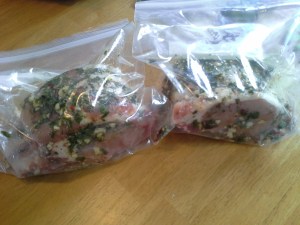
3. Garlic herb Crusted Pork Roast (sub for pork tenderloin)

20150330_111133

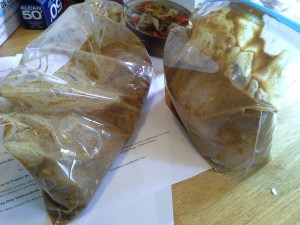
4. Almond butter chicken

20150330_114008

5. Jalapeno Chicken Burgers

20150330_120704

6. Pumpkin walnut protein muffins (my recipe that I added on)

20150330_124132

Grocery shopping took me an hour and a half and cooking took me 4 hours (10am-2pm). We had chili for supper (it was awesome!) and now I have a freezer full of yummy meals to help me through this busy month of marking and writing publications 🙂  You can have better work life balance and Once a Month Meals can help. Check it out!

Thoughts about Nurses and Strength Training

Nurses are a valuable part of our health care system and we work very hard to deliver good patient care.  As a profession we sometimes get a bad rap for not being exemplars of health because some nurses are overweight.  I would like to change the channel on this discussion and approach this issue from a different perspective.  Health is more than just looking good and being fit has important implications for the nursing workforce and healthcare generally.

First of all, body composition is only one component of being healthy.  Hopefully by now you know about the “skinny fat” phenomenon and why being thin doesn’t necessarily mean you are healthy.  On the flip side, I don’t think that people should use this an excuse to overeat.  I encourage us to embrace a more holistic view of health and well-being rather than simply judging nurses’ health based on their appearance.

Secondly, the nursing profession is predominantly made up of women (many of whom are aging) which is important for a few reasons. 

1. The Western cultural ideal of what women should look like influences the standard against which women are measured.  Most nurses are women so therefore some people judge nurses’ “health” based on how well they meet this ideal.  Again, you cannot tell solely by appearances how healthy someone is. 

2. Women and men have different hormones which, like it or not, influences our body fat levels.  Women are supposed to have more fat than men and as we get older (which many nurses are), we tend to put on weight because of changes in our hormones.  

3. Women have been fed a lot of BS about fitness and nutrition.  This ties into my point about the Western beauty ideal.  I find it shocking that I still meet so many women who are afraid of lifting weights because they think it will make them “look like a man” or who spend hours doing cardio and counting calories in their fat free asparatame-filled cancer-causing diet “foods” that have pretty much no nutritional value.  While this may come across as being a little harsh, I want to make it clear that I don’t blame women entirely for buying into the propaganda that has been fed to them for years.  There are tremendous rewards for those who live up to conventional beauty standards so how do you blame people for wanting to be successful, even if many of us don’t agree with the definition of “success” that has been handed to us?

At any rate, I think we do a very good job as women of being mean to each other and I think that needs to stop.  Be a beauty – there is nothing wrong with that if that is what you want.  However, you are more than just a beautiful object to look at!  You can be beautiful and strong and smart and whatever you want.  Sometimes it seems like there is this idea that you can only be one or the other – that beautiful women are stupid or that intelligent women don’t care about their physical appearance.  I don’t think I need to point out how naïve and simplistic these assumptions are.

So why am I talking about beauty in a post about fitness anyway?  Well I believe that many women steer clear of strength training because they think it will sacrifice their beauty.  In other words, if a woman thinks that lifting weights will make her look masculine, she will avoid doing it. 

So what? 

Well, as I mentioned, most nurses are women so this has some implications for our profession.  Nursing work can be very physical at times and requires a high capacity to do work.  Many of us work busy 12 hour shifts and help turn, stand, transfer, and walk patients throughout the day.   Back and shoulder injuries are common among nurses in addition to high levels of stress and burnout.  Being fit and strong can help increase our work capacity, prevent injuries, and improve work recovery.  Increasing our physical strength and endurance can help make our jobs (and lives) easier to handle, provide us with more energy, improve our personal health, help us manage stress, and improve our physical appearance.   With so much to gain, what are we waiting for?