On Being an Academic Nurse

When I began my PhD I felt the need to be cautious about telling people that I was doing it. Luckily I worked with super supportive colleagues and they never made me feel like I was weird or not a “real” nurse because of my interest in research. In fact, many of them were more than willing to share their experience, wisdom, and insights with me when we worked together. I may not have 20 years of nursing experience but I am a hard worker and a caring nurse who is willing to help others and pull my share. I absolutely loved my time working in geriatric rehab as a staff nurse. There were times when I considered quitting the PhD and staying on there instead. I didn’t leave direct care nursing because I didn’t like it. I didn’t leave because I’m afraid of hard work. Or shift work. Or working holidays.

I’m not quite sure what people think academic nurses do but I honestly cannot remember the last time I took an entire 24 hours off from work. I think it was in May? In addition to teaching, research, and service requirements of most faculty, nursing faculty at many schools (mine included) also teach clinical nursing courses. This term I’m teaching second year students in the hospital which means not only 2-3 full shifts in the hospital every week but tons and tons of prep, organizing, evaluation, and follow-up with students. This is not like a lab where they are practicing on mannequins; they are working with real-life patients who are sick. They are interacting with nurses and physicians. Expectations and anxiety are high. I feel like a mother hen trying to protect them while at the same time give them learning opportunities and reasonable autonomy. Teaching clinical is rewarding in many ways but it is one of the most stressful things I have ever done.

I am also a course assistant for the nursing research course and need to prepare to teach a new-to-me course next semester. On top of this I have also been trying to establish my program of research, attend the meetings I need to go to, and get to a stack of article revisions and new submissions. I took a day trip to Ottawa for a conference between clinical days and it was awesome but also exhausting. Somehow I have managed to still spend quality time with my son, work out at least 3 times/week (although Thursday’s “workout” mostly involved staring blankly at the barbell trying to convince myself that it was workout time), and always have some (mostly) healthy food and clean laundry. It’s the small wins, right?

This is not the life I envisioned 11 months ago when I accepted this job. After working and going to school for a million years I thought it would finally be different. I thought I’d have time to have a life but the reality is that I am working constantly. I thought I’d love being closer to home but it’s not really close enough that I can see my family and friends very often. It’s not super helpful when I want to go do something either (“Hey, dad, can you drive 5 hours and babysit while I go to a movie?”).

It’s not all bad of course; I really love a lot of things about my job. I’m just not sure that I want my life to be my job. I realize that the transition to new job in a new province and a new city is a huge adjustment and that it will get easier as time goes on. My first term has been full of many wonderful things and a couple of not-so-awesome things. Highlights include the joy of seeing nursing students grow and learn, interacting with patients and their families and the staff on the unit, and being part of some inspiring research projects. The best thing of all has been looking at the stars with my son on those early mornings before clinical. In the quiet darkness before sunrise we get to share the awe and peace of the night sky together before the busyness of the day begins. These are the moments I cherish most.


The Defense

On Monday morning I had my PhD Defense and it was completely wonderful!

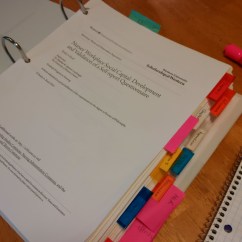
For weeks beforehand I prepared diligently, trying to anticipate difficult questions my examiners might ask. I made an exam binder with my whole dissertation in it, Mplus output, copies of my survey booklet, key references, detailed notes that I made as I re-read my work, etc. What can I say, I like to be prepared.

IMG_20160521_085203 (1)
My super organized exam binder 🙂 

I finally chopped my presentation down to 30 minutes on Friday. I rehearsed it twice on Saturday, one last time on Sunday night (after an epic game of water gun capture the flag with my son). I went to bed on time and slept like a rock.

On Monday morning I was just the right amount of nervous and excited. My game plan was to enjoy the day; the day of my once-in-a-lifetime PhD defense. The hard work had already been done – the hours of endless reading and thinking, writing and rewriting…rewriting again…the data collection and many hours of data analysis….it was all done!  I was as ready as I could be.

The public presentation went well. I felt comfortable and confident and enjoyed sharing my work with everyone who came. About five minutes in, the computer shut down for updates but it broke the ice a bit and helped me relax. It also helped that the audience was full of friendly faces 🙂  After the presentation was over there were a few questions and some discussion.

Then I went to the exam room with the examiners for the “grilling session”. Needless to say, I was pleasantly surprised when the first examiner opened with praise and compliments about my study, writing, and attention to conceptualizing social capital at different levels of analysis, etc. The whole exam is rather a blur but at that point, I knew I was going to be fine. Of course they asked me some challenging questions but overall it was an enjoyable discussion. I am also very hard on myself so it was really nice to hear such positive feedback about my work.

The defense made me realize that everything my committee had done to guide me and challenge me over the past few years had resulted in a solid dissertation study. More importantly, I have developed the knowledge and skills required to be an independent researcher and hold my own as I move on to my new role as an Assistant Professor.

I passed and had minor revisions to complete but the most difficult part was finalizing my acknowledgements section. How do you adequately say thank you to every single amazing person who’s been part of your journey?  The whole reason I became interested in workplace social capital (the topic of my dissertation) in the first place was because I found myself surrounded by caring, supportive colleagues, friends, and family as a single parent working on my PhD. Initially I wanted to look at something completely different – the link between leadership and the work environment and nurses’ physiological health outcomes (something I may do in the future).

My biggest lesson over the last few years, both first-hand, and through my research, is that social capital is tremendously valuable.  Not confined to the workplace, I know I could not have accomplished all that I have without the awesome people in my life. More importantly, social relationships make life meaningful and way more fun!  I am ever thankful for the special people who have been part of my life adventure thus far. Now that my PhD is complete, it feels like 10 million billion elephants are off my back and I am super excited for the new adventures ahead!


How to Choose a Supervisor

Choosing your supervisor is one of the most important decisions that you will make as a graduate student.  Personally, I have been very fortunate with regards to supervisors.   I have worked with excellent scholars who have been supportive and kind, yet pushed and challenged me to learn and improve.

As a graduate student, the importance of having a good relationship with your supervisor cannot be under-emphasized.   I started looking for my doctoral supervisor two years before I applied for the PhD program and was fortunate to be able to work with my prospective supervisor as a research assistant during that time.  This gave me direct experience working with her and helped us develop a positive working relationship.  I knew going into my program that she was someone who I wanted to continue working with and vice-versa.  I primarily choose Western because she is an expert in her field and I enjoy working with her.  I lucked out because Western is also an amazing university with one of the best nursing programs in Canada.

I’m not sure that there are any truly bad supervisors out there but I have heard horror stories from friends in other disciplines.  I think it’s also important to consider that two people may be fantastic but have difficulty working together if it’s not the right fit.   If you are in the process of trying to choose a supervisor, here are some suggestions to help you get started.

1. First and foremost, do your research interests align?

You may really like someone but if they are an expert in something that doesn’t really interest you, it is probably best that you don’t work with them.  Investing your time and energy into something that you don’t enjoy is only going to make you miserable and potentially put strain on your relationship.

2. Clarify expectations on both sides. 

What do you expect from your supervisor and what do they expect of you?  Sounds pretty basic but you’d be surprised how many people don’t know what they should expect or look for in a supervisor, or on the flip side are unclear about what they are expected to do as a graduate student.

Start by thinking about what you want to learn through your graduate studies.  What skills and expertise are you aiming to acquire?  Graduate school should be about more than just getting a piece of paper!  This is an exciting opportunity to learn so take advantage of it.  (If you don’t feel this way, perhaps you should reconsider your decision or engage in some personal reflection about your approach to learning).  What do you need from your supervisor to help you be successful in achieving your goals?   Regular meetings?  Constructive feedback?   Opportunities to work on research projects?  High fives?

Ask potential supervisors what they expect of their students.  What GPA do they expect you to maintain?  Which courses do they expect you to take?   How long does it generally take their students to complete their degrees?   What is the expected timeline?   Do they want you to attend certain conferences or work for them as a research assistant?

Being up front about expectations can help you both decide if this will be a mutually beneficial relationship and eliminate a lot of frustration and misunderstanding down the line.

3. Talk to a current or former student.  

Having a coffee with someone who has worked with your prospective supervisor is a great way to get a sense of what they are like to work with.  It can also give you some insight into other aspects of the program such as coursework, other faculty members, and most importantly, its culture.  Is it competitive or cooperative?  Are most students working full-time as nurses, managers, and educators or are they full-time students who spend time together regularly?   Try to get a feel for what the experience has to offer and how that aligns with what you are looking to learn and accomplish as a grad student.

Final Thoughts:

I’m sure there are other questions that you will come up with, but I hope this is helpful in getting the gears going!  I am a strong advocate of nursing graduate education and I think that we need to do a better job of encouraging and supporting nurses who are interested in furthering their knowledge and expertise in this way.   Positive relationships within the academic environment are just as important as those in the health care setting so I encourage you to seek out a supervisor who will offer you their best and who will bring out the best in you.

Have a great day!

-Emily