Blog

On Being an Academic Nurse

When I began my PhD I felt the need to be cautious about telling people that I was doing it. Luckily I worked with super supportive colleagues and they never made me feel like I was weird or not a “real” nurse because of my interest in research. In fact, many of them were more than willing to share their experience, wisdom, and insights with me when we worked together. I may not have 20 years of nursing experience but I am a hard worker and a caring nurse who is willing to help others and pull my share. I absolutely loved my time working in geriatric rehab as a staff nurse. There were times when I considered quitting the PhD and staying on there instead. I didn’t leave direct care nursing because I didn’t like it. I didn’t leave because I’m afraid of hard work. Or shift work. Or working holidays.

I’m not quite sure what people think academic nurses do but I honestly cannot remember the last time I took an entire 24 hours off from work. I think it was in May? In addition to teaching, research, and service requirements of most faculty, nursing faculty at many schools (mine included) also teach clinical nursing courses. This term I’m teaching second year students in the hospital which means not only 2-3 full shifts in the hospital every week but tons and tons of prep, organizing, evaluation, and follow-up with students. This is not like a lab where they are practicing on mannequins; they are working with real-life patients who are sick. They are interacting with nurses and physicians. Expectations and anxiety are high. I feel like a mother hen trying to protect them while at the same time give them learning opportunities and reasonable autonomy. Teaching clinical is rewarding in many ways but it is one of the most stressful things I have ever done.

I am also a course assistant for the nursing research course and need to prepare to teach a new-to-me course next semester. On top of this I have also been trying to establish my program of research, attend the meetings I need to go to, and get to a stack of article revisions and new submissions. I took a day trip to Ottawa for a conference between clinical days and it was awesome but also exhausting. Somehow I have managed to still spend quality time with my son, work out at least 3 times/week (although Thursday’s “workout” mostly involved staring blankly at the barbell trying to convince myself that it was workout time), and always have some (mostly) healthy food and clean laundry. It’s the small wins, right?

This is not the life I envisioned 11 months ago when I accepted this job. After working and going to school for a million years I thought it would finally be different. I thought I’d have time to have a life but the reality is that I am working constantly. I thought I’d love being closer to home but it’s not really close enough that I can see my family and friends very often. It’s not super helpful when I want to go do something either (“Hey, dad, can you drive 5 hours and babysit while I go to a movie?”).

It’s not all bad of course; I really love a lot of things about my job. I’m just not sure that I want my life to be my job. I realize that the transition to new job in a new province and a new city is a huge adjustment and that it will get easier as time goes on. My first term has been full of many wonderful things and a couple of not-so-awesome things. Highlights include the joy of seeing nursing students grow and learn, interacting with patients and their families and the staff on the unit, and being part of some inspiring research projects. The best thing of all has been looking at the stars with my son on those early mornings before clinical. In the quiet darkness before sunrise we get to share the awe and peace of the night sky together before the busyness of the day begins. These are the moments I cherish most.


Perplexed by the NCLEX in Canada

nclex2

To most Canadian nursing educators, the NCLEX is about as welcome in Canada as Donald Trump. I am not alone in being royally PO’d that the provincial nursing regulatory bodies decided to nix the Canadian Registered Nurses’ Exam (commonly known as the CRNE)to replace it with the NCLEX in 2015.

In case you’re not in nursing or you aren’t Canadian, the NCLEX is the American nursing licensing exam that all American nurses must pass after their nursing degree before they can register as a Registered Nurse.  It is an adaptive computerized test that will keep asking tailored questions until the program is 95% sure that the candidate is above or below the passing standard.  To be clear, I think that this format and system of testing is awesome.  What isn’t awesome is having to teach my students content that is American so that they can pass the test (as if we don’t already have enough content!).  The French translation of the NCLEX is also so bad that many Francophone students are failing because they can’t understand the questions (I’m talking outside of Quebec of course because they wisely decided to keep their own nursing exam). Moreover, although French NCLEX practice materials are starting to pop up (after they realized that it was an issue), there aren’t nearly as many resources for French students and educators as for their English-speaking counterparts.  Two giant strikes for the NCLEX.

I have no idea why on earth the provincial nursing regulatory bodies made this decision or if they understood the implications of their decision.  Initially I was told that it would be a Canadian version of the NCLEX and maybe they thought so too. It is not. It is the exact same database of questions for all candidates in all countries. I could be wrong but I think the rationale behind this is that the NCLEX supposedly is “context-free”. I attended an NCLEX workshop for nursing faculty two years ago and the facilitator explained to us how the test worked and how the questions are designed.  She also proudly stated that “the NCLEX has no context”.  What she meant was that the questions are designed to be applicable to all contexts. I would question that. Is nursing really that black and white?  Maybe some things are but I’d argue that real life requires professional judgement calls too.

There are also huge differences between the US and Canada in terms of how we view health care (as a service to be bought through insurance versus as a basic human right).  Specific examples of the “Americaness” of the exam include “the five rights of delegation” and the scope of practice for an RN versus and LPN (Licensed Practical Nurse)[or RPN (Registered Practical Nurse) in Ontario]. In Ontario where I started my nursing career, I worked on a hospital unit with half RNs and half RPNs. We both had our own patient assignments and although the RNs were able to be in charge and dealt with the more complex patients, we were never assigned an RPN to delegate work to and have them report back to us. They had autonomy and we all worked together as a team (for the most part). In the US, LPNs report directly to RNs and the RN assigns patients or patient care duties to them. LPNs are not allowed to engage in patient teaching or any of the nursing process (assessment, planning, evaluation, nursing judgment). (See the Joint Statement of the American Nurses Association and the National Council of State Boards of Nursing here). Why does this even matter? Well, now we have to teach our nursing students about delegation in their own province and the rest of Canada (it is not exactly the same from province to province) AND America. If we don’t tell them that delegation rules for the NCLEX they are going to answer those questions incorrectly and it sure as heck isn’t because we don’t teach them about delegation in Canada.

Some have argued that it is not an American test, to which I respond, then why are Canadian-specific NCLEX prep books popping up?  Is it because we are just another market that companies want to exploit, or is it because there is American content that Canadian students need to learn in order to do well on the test?

So where does this put us?  Precisely in a giant head-lock. We have excellent nursing programs across Canada and in general our nurses have more education and better quality education than nurses in the US. Many of their students still take 2-year associate degrees whereas in Canada all RNs have to have a four-year bachelor’s degree. Every day I am impressed with the quality of the education that the students get at UNB and especially with the amount of real life clinical they get (over 1400 hours).  However, now we need to add in NCLEX-specific content to make sure that our students are prepared to take an American nursing test. Not to prepare them for their practice as an RN – we do that exceptionally well already!

Clearly I have strong feelings about the NCLEX and not everyone will agree with me but I don’t think that Canadian nursing students should have to learn American content in order to become nurses in Canada. I also don’t think that nursing schools should be judged by their NCLEX pass rates. Passing the NCLEX or not doesn’t necessarily reflect the quality of a nursing program, but, rather the “NCLEX test readiness” of graduates. Some schools are starting to make it a requirement for nursing students to write the HESI NCLEX practice test and obtain a certain score before they can graduate and write the NCLEX. This ensures that pass rates on the actual NCLEX are high because it increases candidates’ test-taking skills and ensures that they don’t write until they are ready (sometimes after writing the HESI numerous times).  As a result, high NCLEX pass rates are not necessarily a reflection of the quality of the nursing school, but of the readiness of the student to write the NCLEX. I don’t think that it is a bad thing to take the HESI per se, but I do think it is misleading to compare first-time NCLEX pass rates between schools who have a HESI score requirement and those who do not. Taking these tests (the HESI and the NCLEX), attending NCLEX review sessions, and purchasing NCLEX study guides are also very expensive so making the decision to require the HESI is not one to take lightly.

So there you have it. The NCLEX has made it harder to become a nurse in Canada and more challenging to be a Canadian nursing educator. Arguably, it has also made it easier for Canadian nurses to practice in the US (if you don’t mind working in a f0r-profit health care system). I’m not a fan and I think that it was strange decision. It is also possible that I am not privy to confidential information about why this decision was made and, thus, do not fully understand the rationale behind it. That being said, until the situation changes, it really doesn’t matter if I agree or not, no matter how logical my arguments are; the fact is that we need to do what we can to prepare our students for an American test.


Working Out is Non-negotiable

We hear it all the time now that work-life balance is a struggle for pretty much everyone.  My new job is awesome but I am also starting to realize that there is absolutely just not enough time to do everything that I want to do…at least not all at once.

I am excited for everything ahead but also trying to pace myself!  This fall I am teaching a clinical course in chronic care for the second year nursing students which involves 2-3 8-hour shifts every week plus individual student meetings, feedback, prep, and evaluation. I’m also helping with the third-year nursing research course (no sweat).  I am also submitting a couple of grant applications, working on ongoing studies, and getting acquainted with fellow researchers at UNB who have shared interests.  Of course, this is all awesome and I don’t think I could have asked for a better person-job fit!

I am also mindful of taking care of myself and making sure that I get enough sleep and prioritize my workouts. For me that means getting up at 5am to workout in the basement and going to bed by 9 or 10pm at the latest.  Although I’ve decided not to compete in powerlifting until next Spring or Summer when my workload calms down, working out is non-negotiable for my physical and mental health.

I may not be breaking any records lately or “show-ready” for a fitness competition but lifting is an awesome stress-reliever and it’s one of the few things that I do just for me.  I aim to get in 4 days/week (shoulders; bench; squat; and deadlift focused days) and have also been working more on my mobility because sitting at a desk most of the time isn’t exactly good for that. I also bought a treadmill which has made a world of difference since I can’t exactly leave my 3-year old at home to go for a run (one-arm stroller running is hateful and I refuse to do it).

It is difficult to make fitness a priority when you have other things going on, when you’re tired all the time, and your budget is tight (groceries in NB are crazy expensive!), I of all people totally get it. However, if you don’t take care of yourself first, you can be limited in your ability to be there for those you love and be effective at work. These are the things I think about at 5am when I don’t want to get out of bed…and then I get up and get ‘er done (most of the time).

The Defense

On Monday morning I had my PhD Defense and it was completely wonderful!

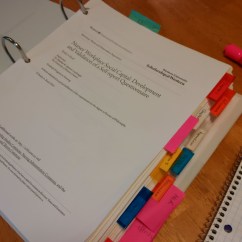
For weeks beforehand I prepared diligently, trying to anticipate difficult questions my examiners might ask. I made an exam binder with my whole dissertation in it, Mplus output, copies of my survey booklet, key references, detailed notes that I made as I re-read my work, etc. What can I say, I like to be prepared.

IMG_20160521_085203 (1)
My super organized exam binder 🙂 

I finally chopped my presentation down to 30 minutes on Friday. I rehearsed it twice on Saturday, one last time on Sunday night (after an epic game of water gun capture the flag with my son). I went to bed on time and slept like a rock.

On Monday morning I was just the right amount of nervous and excited. My game plan was to enjoy the day; the day of my once-in-a-lifetime PhD defense. The hard work had already been done – the hours of endless reading and thinking, writing and rewriting…rewriting again…the data collection and many hours of data analysis….it was all done!  I was as ready as I could be.

The public presentation went well. I felt comfortable and confident and enjoyed sharing my work with everyone who came. About five minutes in, the computer shut down for updates but it broke the ice a bit and helped me relax. It also helped that the audience was full of friendly faces 🙂  After the presentation was over there were a few questions and some discussion.

Then I went to the exam room with the examiners for the “grilling session”. Needless to say, I was pleasantly surprised when the first examiner opened with praise and compliments about my study, writing, and attention to conceptualizing social capital at different levels of analysis, etc. The whole exam is rather a blur but at that point, I knew I was going to be fine. Of course they asked me some challenging questions but overall it was an enjoyable discussion. I am also very hard on myself so it was really nice to hear such positive feedback about my work.

The defense made me realize that everything my committee had done to guide me and challenge me over the past few years had resulted in a solid dissertation study. More importantly, I have developed the knowledge and skills required to be an independent researcher and hold my own as I move on to my new role as an Assistant Professor.

I passed and had minor revisions to complete but the most difficult part was finalizing my acknowledgements section. How do you adequately say thank you to every single amazing person who’s been part of your journey?  The whole reason I became interested in workplace social capital (the topic of my dissertation) in the first place was because I found myself surrounded by caring, supportive colleagues, friends, and family as a single parent working on my PhD. Initially I wanted to look at something completely different – the link between leadership and the work environment and nurses’ physiological health outcomes (something I may do in the future).

My biggest lesson over the last few years, both first-hand, and through my research, is that social capital is tremendously valuable.  Not confined to the workplace, I know I could not have accomplished all that I have without the awesome people in my life. More importantly, social relationships make life meaningful and way more fun!  I am ever thankful for the special people who have been part of my life adventure thus far. Now that my PhD is complete, it feels like 10 million billion elephants are off my back and I am super excited for the new adventures ahead!


Academic Conferences and Children

I’m excited and slightly overwhelmed by all of the planning currently going on in my life. I have been invited to present at two awesome conferences this summer and am preparing to move to a new city to start my first tenure-track job. Very exciting, but also extremely stressful because I am in charge of organizing everything and I am also getting ready to defend my dissertation at the end of the month (also amazing but stressful).

Regarding conference planning, the biggest stressor for me is figuring out the best plan for my child while I’m away. Sometimes it makes sense to bring him along but that requires an additional responsible adult to come with me so that I can actually present and attend some of the conference. It’s obviously more expensive to do that but it can also be more fun in the end, even if it requires more coordination to plan.

When it doesn’t make sense for him to come, I have the glorious fun time of organizing child care for him. I am fortunate to have lots of social support – in London. Now that I am moving to a new city it’s going to be a little trickier to navigate all this. I am closer to family but they are busy with their own lives and I feel guilty asking for help. I feel ALL the mom guilt – guilt for spending time alone/with other grown-ups. Guilt for having a career that is important to me. Guilt for not making my child the centre of my universe at all times. Guilt for not having a significant other. Guilt for not enjoying my time away as much as I could because I feel guilty about all these other things. Enough with the guilt already, right!

For better or worse, research dissemination and staying current is part of my job. It’s not like you finish your PhD and that’s the end of learning and scholarly work. I feel very fortunate that travel is part of my job but it’s not like it’s an all-expenses paid free-for-all! Unless you are a well-funded researcher (which is the exception rather than the rule), there is little funding to assist with the expenses of conferences. It also takes a tremendous amount of time and energy to prepare an abstract and a good presentation, a fact that often goes unacknowledged.

Sure, you could go to one conference a year but that might be a career-limiting move because fewer people will see your work. It also limits your exposure to interesting research across disciplines which may provide valuable insights and generate new ideas. I value the professional memberships that I have in nursing and management and conferences are an important part of these organizations. Increasingly, there are more and more conferences to go to as well! For example, APA puts on an excellent Work and Stress conference where every presentation is something I am interested in. Obviously you can’t go to everything, but it is not easy to choose or to say no.

So I’m left asking myself the question: “what’s a sane number of conferences to attend each year?”

Not sure that I have an answer yet but I will figure it out 🙂


Sitting is the New Smoking…

sitting-is-killing-you

So apparently, sitting is the new smoking…and therefore, I am probably going to die.  Not really (I hope), but there has been a whole lot of attention to the “sitting epidemic” recently, highlighting how much time most of us spend sitting during a regular work day.  (Clearly, they have not spent any time with a staff nurse lately!).  The solution? A standing desk, of course.  Or a treadmill desk. Or taking frequent breaks. Making sure that you have an ergonomically designed work station….

On perhaps, we need to start asking different questions about how our work is designed. For example, in academe, we do spend a lot of time sitting at our computer working on all kinds of things from research grants to articles, powerpoints, data analysis, etc.  Some of this work is unavoidable I think but I also wonder if some of this time could be used more effectively. For example, do we really need to write 20 research articles using one dataset?  Do we really need another book chapter on such and such that a handful of people will read?  What if we publish one really strong paper and then talk to people about our ideas instead?  How much more fun (and time effective) is it to interview people, record a podcast, or share a conference presentation on YouTube?  Obviously, none of these things completely eliminates computer time but I am guessing that the impact of one really great Ted Talk is much broader and valuable than a research article buried in an academic journal that mostly only other researchers are going to read.  Unless of course, more research articles = more tenure points.

Sometimes collecting tenure points feels a bit like being Mario trying to get all the gold coins within reach (and apparently research activities that require copious sitting are as likely to kill you as sitting on your butt playing too many video games).

mario coins.jpg

So let’s assume that you just have to accept that your job requires some sitting.  What can you do to make it less bad?

  1. Take care of your body. Exercise. Eat nutrition food. Go easy-ish on the coffee (mostly). Get enough sleep.
  2. Plan ahead for the ebbs and flows of the school year. Midterms? Exam period? Research grant deadlines?  These are busy times, but they are not unexpected!  Get a calendar and plan ahead. I like to make extra healthy meals and stick them in the freezer to reduce cooking time. Having some exercise equipment in the basement is also really awesome for saving time when I am busy.  There have also been times when I have had to hire my babysitter to give me an extra morning or afternoon to do work on the weekend. (Fingers crossed that being a professor is more awesome than being a grad student working full time!).  Do I always get to do a full workout? No. But sometimes 10 minutes of exercise is better than nothing 😉
  3. Be super organized. You can waste a lot of time trying to simply locate documents, references, and sort through different versions of things.  Having a logical way to organize files and name documents will save you a ton of time. I even get my students to name their documents in specific ways so that I don’t end up with 25 versions of “Assignment 1”.  Using a reference management software program is also a really great way to save time with citing and reference lists, especially when you need to use different referencing styles for different journals. No more wasted time seeking and downloading the same reference articles over and over!  Lastly, using tags and folders in your email inbox is another strategy that saves oodles of time. If you can use the same main categories as your main files on your computer, that is even better!  I like to use gmail and get all of my other emails forwarded to that one account.
  4. Be reasonable. Sometimes I struggle with this. (e.g. “Of course I can have a baby and do my PhD and publish and compete in powerlifting and work at the hospital and teach, etc. at the same time…).  I like to set big goals and have a tendency to say yes to everything but I have learned that this usually leads to burnout. A better strategy is to take on a few things that you can really focus on. Reading (and re-reading) the Power of Less  is a helpful place to start.  Academia seems to reward people who work hard and do a lot but I think another point to consider is that learning and teaching is exciting!  Research and teaching are (should be) both about learning new things and understanding more about the world around us, as well as sharing that knowledge and excitement about learning.  It is hard to say no when you are excited about learning and sharing ideas!   Is it reasonable to spend 20 hours a week preparing for a class you are teaching for the first time?  Maybe not if you are teaching 3 courses and have other things on your plate.
  5. Aim for excellence, rather than perfection. I don’t think there is such a thing as “perfect”. The pareto principle, or 80:20 rule comes in handy here too. It states that 80% of your outcomes/effects will come from 20% of your work. Do you really need to make 50 slides for a 10 minute presentation?  Or, would 10-12 slides, well-designed, be more captivating and effective in getting your point across?  How much time are you spending sitting, working on things that have little to no impact?  After all, sitting is the new smoking….

I want an academic career. When’s the BEST time to have a baby?

The short answer is that there is no best time and that really, anytime is the best time. Nothing can ever prepare you for the challenges and joys of parenting – regardless of whether or not you are a grad student, a practising nurse, or a stay-at-home mom.

That being said, it helps if you have a committed partner and some sort of plan.  Personally, I did not have that experience. Let’s just say that the pill is not 100% effective.  I stuck with my life plan (sort of) and worked at the hospital as an RN until September and started my PhD 9 months pregnant (against all good sense I think) and took one week off from classes (because my supervisor made me). The “birth plan” involved my wonderful friend driving me and my roommate to the hospital where we streamed episodes of New Girl while I waited for my son to decide to make his grand entrance. My sister and her boyfriend flew in and met us there (he stayed outside).

Lucky for me, in Canada we get a year of paid maternity leave and you can be in school during that time – I didn’t plan this out at all but it definitely made life a lot less stressful. For the first semester we didn’t have a car so we got up early to catch the bus so I could take him to the wonderful home daycare we found, then back on the bus to school. After school I would go back on the bus to get him, and again on the bus to go home or sometimes to the Y and then home.  It was exhausting!  On the plus side, it really made me appreciate the amount of time and energy it takes to coordinate life when you don’t have a car.  Before my son was born I rode my bike a lot and it was hard to not be able to do that anymore.

One of the best things about being a single parent and a nurse was how much support I received from others. The nurses at work threw me a baby shower, offered support and advice, and even offered me lifts to and from work when they could.  My former roommate lived with us for a year until she finished her nursing degree (God bless her) and friends have helped take care of my son so that I could go to work, school, and conferences (one even road-tripped with us to Indianapolis!).  Their love and support made me realize how important relationships are in life and sparked my interest in workplace social capital (my dissertation topic).  In many ways, our lives have been richer because it was obvious to others that we needed them.  I’m not sure that it is always the same when people are married and it is assumed that they have all the support and help they need (I’m sure that it is different for everyone).

I think you can balance a demanding PhD program with being a parent but it requires focus, discipline, and support. The balance is always changing too! The time you get to do homework when you have a baby who sleeps a lot is different from the time you get when you have a busy 3 year old who wants to play all the time.  You have to learn to be more flexible and adapt to what your child (or children) need as they grow up.  My son has helped me slow down and reminds me daily to play and enjoy life.  Not that I didn’t before but children have such an awesome way of looking at the world.

At times I have had to make tough choices about work because of being the only parent – for example, this past fall I chose a day job as a research coordinator (which I find rather stressful) because it had regular hours – but because of that I had to give up my part-time staff nurse position at the hospital (which I love) and go casual. It’s straight-up difficult to find daycare for shift work – especially when you are part-time and don’t have a consistent schedule.  I miss seeing my co-workers and my patients. Research is rewarding and I have learned a lot this year but it’s different.

Ultimately, I think being a parent has made me a better person and has made me more efficient with my time. When I am home, I don’t want to be thinking about work so I work hard at work to be organized and focus on things that are important. I have one dedicated day a week to work on my thesis and try to keep it contained in that time frame. I think one of the big problems with academic culture is this idea that working longer hours makes you a better, more productive member of the academy.  Numerous studies show that overworking people actually makes people less effective, less happy, and has very damaging effects on their health.  That, however, is a topic for another post I think…

Grant Writing Success

In late November I was offered my dream job as an Assistant Professor at the University of New Brunswick in the Faculty of Nursing (I enthusiastically accepted!).  I am getting ready to board the train on the tenure track and plunged right into writing my first CIHR grant as a PI. Not for the reasons you might think either. While I do understand that obtaining funding is valued as a performance outcome for faculty members, having money to do your research allows you to – wait for it – do your research 🙂  That being said, being awarded the money which allows you to accomplish valuable work is not the only reason to write a grant proposal and it is not the only measure of success (although, again, it is super helpful and makes it easier to do what you are trying to do).

So what else defines a successful grant application?  For me, success includes learning more about the research problems that I am interested in examining, learning more about what other researchers have done, and thinking about what we need to know and/or do to solve these problems (ultimately contributing to a healthier health care system and society I hope!). Building connections with other researchers, health care providers, and policy makers can also be a lot of fun!  Over the last few months I have been able to connect with others who share common interests and also have unique expertise and experience to bring to the project that I initiated. Regardless of whether or not we get funded for the project, we now have developed a plan, a budget, and have a good handle on what we want to accomplish through our research.

As a new kid on the block in New Brunswick it has also been really helpful for me to start meeting people and getting a better understanding of my new province. I grew up in Nova Scotia but each province has a different approach to health care delivery and my training and experience in nursing has been in Ontario in an urban centre which is quite different than Fredericton.  Making connections now will make it easier to fit in when I get there and I feel like it is a very welcoming place.

I do think our project is important and worth funding but I also recognize that there are limited funds and lots of great ideas worth funding.  It also depends on who ends up reviewing our application and the other projects that are being submitted.  At this point I’m not sure if you get “tenure points” for submitting applications that don’t get funded but it’s not like a straight-forward sport like track and field where there is a clear winner. Train hard, eat right, be the best, win, right?  Research grant competitions are more like artistic sports like figure skating and gymnastics where judges (reviewers) assess the relative value of competitors/applications and assess whether or not you will be able to successfully do the proposed research. Comparing research projects and teams that are qualitatively diverse makes it harder to decide which projects should be funded.approved

For these reasons, I think it is important to define success not just in terms of getting funded or not. As a novice PI, I am uncertain whether that will go in my favour or not.  After 4 degrees, 3 theses, and being able to balance all the demands of school, work, residence life, teaching, research, and being a single parent while also staying fit, I am 110% confident that I will be a good team leader and that we will be able to carry out the project as a team.  Of course, when you submit a research grant application you can’t put “single mom/time management ninja” or “worked 10 part-time jobs including running a residence hall while completing my undergrad” as part of your accomplishments/skills (and if you did, it would probably count against you).  Again, another reason why I think it is important to always do your best and see the process and the development of the proposal as an accomplishment and an opportunity to learn and grow as a writer and researcher.

Of course, if we do get the grant, it will be icing on the cake and I will be literally jumping for joy because we can start putting our research plan into action.  There is absolutely no denying that actually getting the grant is a successful outcome too!  And a very sweet one at that! However, if it is the only outcome that you focus on, I think that you miss out on a lot of other great things about writing research grants.


Cooking Once a Month is awesome

Some of advice I ever got about Grad School was from a former professor who told me how batch-cooking and freezing meals helped her complete her dissertation. This simple strategy makes a huge difference in terms of productivity and eating healthy (if you choose recipes carefully).  For most of us our leisure time is limited (and sacred), especially if you are balancing family life and a demanding career. Who doesn’t want to spend less time in the kitchen and more time playing, connecting with others, being active, and having a life!

Batch cooking may just be your ticket!  The basic idea is that you cook multiple meals on one day and freeze most of them so that you have less prep down the road.  I’ve been doing this on a weekly basis for a while now but recently I felt like I was in the kitchen all the time so I started looking for new ways to do this.

After scouring the web I found several menu subscription services but nothing that offered many choices – most had 1 menu a month, take it or leave it. So of course I decided to do it on my own but I got quickly frustrated because there are too many recipes to choose from on the internet and I couldn’t decide which ones I wanted to make. It was taking up a lot of my time and the whole point was to save time and make life easier – not spend hours trying to decide what I wanted to have for dinner!

Finally, I found Once a Month Meals – a group of moms who offer several types of menus (e.g. traditional, vegetarian, paleo, etc.) to choose from and make it easy for you to cook meals for an entire month.  For each menu you get the recipes, an organized shopping list, prep day instructions (chopping, etc.), cooking day instructions, thaw list (to help you plan when to take things out of the freezer so you can eat them), serving day instructions (some recipes have add-ons or need cooking), and labels. Obviously it would take a few hours to do all this on your own!

You can also swap meals to make your own custom menu if there is something that you don’t like.  Just enough choice to be flexible without being overwhelming. The other great thing about Once a Month Meals is that they provide very helpful tips and resources to help you every step of the way and save you a lot of headaches.  For example, starting with a mini menu rather than a full menu was a really good idea.

I signed up immediately and yesterday I did my first mini menu.  It was a huge success!  Take a look at how my day went:

Before the big day:

  1. Pick your menu. I chose to do a mini-menu because I only had 1 day free to do everything (shop, prep, and cook).
  2. Decide how many people you are cooking for.  Even though there’s just me and my son I chose to cook for 4 people so that I would get more meals for basically the same amount of work. (Tricky, I know lol) The recipes and shopping list automatically update to correspond to the number of meals you select. Thank you Once a Month Meals!  This is super helpful.
  3. Check supplies and ingredients in your kitchen.  Do you really have 4 apples in the fridge for that recipe? Do you have a slow-cooker if you need one?  Cross-check the shopping list with your inventory and makes notes so you won’t forget.
  4. Add other things you want to buy for the week to your list. The menus don’t cover all of your meals and snacks so add in whatever else you need for the week. For us that’s stuff like milk, yogurt, salad greens for lunches, coffee, etc.

Shopping tips:

  1. Bring a pen so you can check off everything as you put it in your cart.
  2. Be prepared to spend more than your typical shopping trip. You are cooking more than you usually would so obviously it will cost more money. However, it also will save money because you will waste less food and make fewer last-minute trips to the grocery store or fast food joints.  (If you have time and energy for price-matching and/or coupon clipping this can help you save money too).
  3. Don’t go shopping when it is busy. Not something that I enjoy anyway but if you are trying to buy a lot of food it can be overwhelming to deal with a ton of people at the same time.

Prepping and Cooking:

I decided to prep and cook each recipe 1 at a time. The fine folks at Once a Month Meals recommend doing prep the night before your cooking day and I think that would be faster, especially if you are cooking a full menu.  For example, I ended up chopping garlic 3 or 4 separate times for different recipes instead of doing all the garlic at once. Research shows that switching between tasks takes more time than doing one at a time. Another benefit is that you lower the chance of cross-contamination (meats and veggies) and use fewer cutting boards 🙂

Tips:

  1. Clean your kitchen before you start.
  2. Prepare slow-cooker dishes first. Set em’ and forget em’ while you work on other recipes 🙂
  3. Wash dishes as you go. This reduced the number of dishes that I used and the cleanup I had at the end.
20150330_092258
All cleaned up and ready to cook!

What I made:

1. Paleo meatloaf:

20150330_104532

2. Crockpot sweet potato chili

20150330_104545


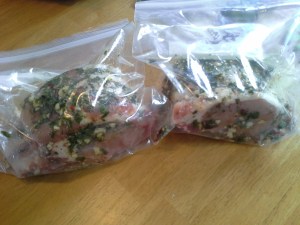
3. Garlic herb Crusted Pork Roast (sub for pork tenderloin)

20150330_111133

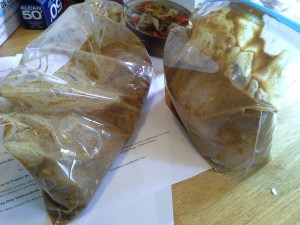
4. Almond butter chicken

20150330_114008

5. Jalapeno Chicken Burgers

20150330_120704

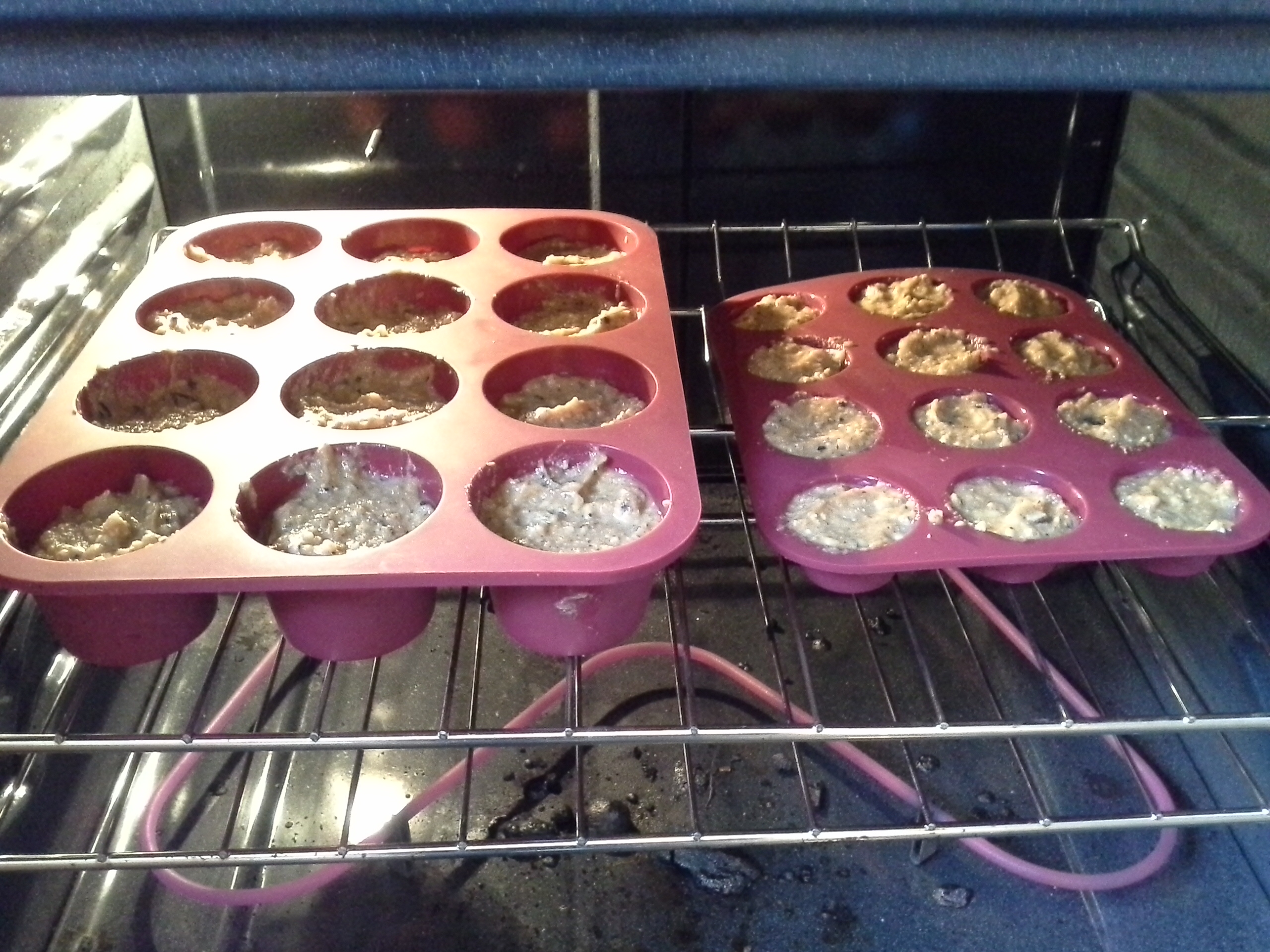
6. Pumpkin walnut protein muffins (my recipe that I added on)

20150330_124132

Grocery shopping took me an hour and a half and cooking took me 4 hours (10am-2pm). We had chili for supper (it was awesome!) and now I have a freezer full of yummy meals to help me through this busy month of marking and writing publications 🙂  You can have better work life balance and Once a Month Meals can help. Check it out!

Lessons from my First Year of University Teaching

Last term I taught the 3rd year data analysis course for nursing students at Western.  Boy, was it a ton of work!  Overall, I really enjoyed the experience and learned a lot about how teaching and learning has changed since I first began university back in 2001.  Currently I am teaching a graduate-level course in post-positivist (quantitative) research methodology and that is a super fun!  I really enjoy in-depth intellectual discussions about research with a small group (18 students) rather than talking at 120 undergrads who don’t care about statistics at all and want the “right answer” (which isn’t always possible).

Here are the top lessons I learned about teaching so far (I am sure there are many more to come!)

1. I am a dinosaur.  I grew up going to the library, reading hard copy books, writing out essays on paper with a pencil, etc. Students these days have always had the internet at their fingertips and they will sit there and Google everything that you say like fact-checkers at a political debate. Take home message: I need to learn how to use technology to my advantage and not waste valuable time in class lecturing off of PowerPoint slides when I could be using more engaging activities during face-to-face time.

2. Students need structure more than I realized.  One of the assignments last term was to do a content analysis of transcripts from interviews or online forum discussions by patients with different conditions.  Rather than embrace the freedom of interpreting the data for themselves, many students were frustrated because there was no certain correct answer (like so many things in real life).  We gave them a reference for an article that told them step-by-step how to conduct a content analysis and about 1/3 of the class did not read it, resulting in them doing the assignment in a way that did not make sense. Somehow the fact that they did not read the article that they were explicitly told to read was my fault. Interesting.  Take home message: Repeat key instructions in class, post them on slides, etc. Give them explicit instructions.

3. TAs are like a box of chocolates. Seriously though, you never know what your TA will be like and they may not know the course material or mark assignments the way that you would like them to be marked.  They are also graduate students with their own coursework, lives, etc. so be realistic about expectations. Despite having good rubrics, the assignments that we had in the course were lengthy and complex which also made it challenging for the TAs. Also, students will blame you for delays in marking and mistakes on their rubrics, even if you make sure they know their TA does the marking.  Take home message: Design assignments that are staged so that they are easier to evaluate by someone with little content knowledge of your course.

4. PhDs do not prepare people to be awesome teachers.  I really thought that my experience teaching lifeguarding and first aid, personal training, and coaching basketball would make teaching easier but university teaching is very different.  It is kind of sad that students pay so much money for school and the quality of teaching is so varied.  I really like that tenure-track teaching positions are becoming more prevalent and that most schools are providing support for teaching.  I feel lucky to be able to gain some teaching experience and attend workshops and courses at Western’s Teaching Support Centre during my doctoral program. I cannot imagine how difficult it must be to pop into a tenure-track job and try teaching for the first time while trying to apply for grants, publish articles, and commit to service.  This job is crazy.  Don’t get me wrong, it is what I want to do (and as an RN I know that I have lots of other options), but I am also not naive to the demands of the career path I am pursuing. Take home message: I need to devote more time to learning to be an effective teacher so I can have a successful transition into a tenure-track position.

Now to get back to working on that dissertation proposal!  (It is almost done and I am planning to defend in the Spring so that I can get started on data collection!).